🗓️
Sameer Sharma
Backed by 30 years of SISA Group experience and a KYC-vetted local team, we help NRIs take care of their parents in India with documented proof.
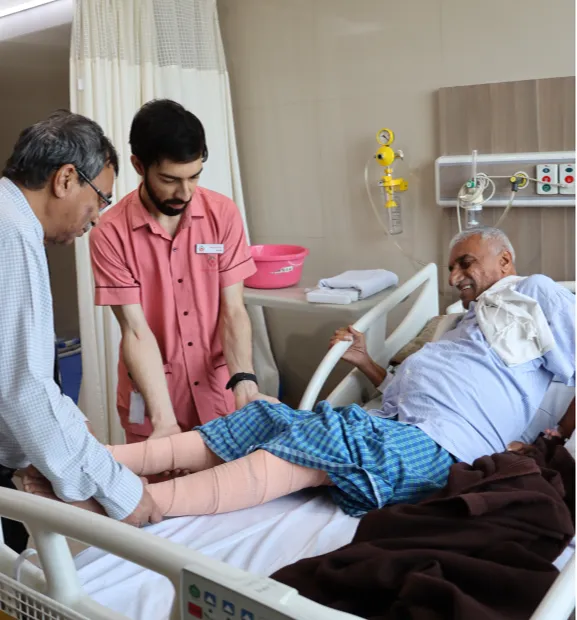
Parent support services for NRIs help families living abroad arrange dependable local support for parents in India. These services can coordinate wellness visits, doctor and hospital appointments, medicine pickup, emergency response, hospital assistance, and regular updates so that NRI children can stay informed even when they are thousands of miles away. If your parents live alone in India, are ageing, manage health conditions, or need help with day-to-day coordination, a local support system can reduce uncertainty and make it easier to respond quickly when something changes.

SISA provides family care and parent support services across India, with a focus on practical on-ground coordination, proof-based updates, and respectful support for elderly parents.
Important: SISA is not a full-time caretaker and does not provide medical treatment. We coordinate the appropriate care, accompany parents where needed, and help ensure that important follow-ups are not missed.
Why do NRIs worry about parents living in India?
Living abroad creates a specific kind of worry: you may be available on WhatsApp, but you cannot be physically present when your parent needs help.
Many NRIs worry about:
Parents living alone.
A parent falling ill suddenly.
A medical emergency at night.
Difficulty reaching a doctor or hospital.
Missed medicines or follow-up appointments.
No one nearby to accompany a parent to a hospital.
Parents not sharing health concerns to avoid worrying their children.
Elderly parents feeling isolated or lonely.
Home safety, repairs, or daily errands becoming difficult.
Not knowing whether someone actually visited or completed a task.
The concern is often not only about a major emergency. It is also about the smaller, recurring needs that can become difficult when parents are ageing and their children are abroad.
Elder-care providers commonly support overseas families through regular wellness visits, doctor coordination, emergency support, medication support, and structured updates.care.samarth+2
What are parent support services for NRIs?
Parent support services for NRIs are local coordination services that help overseas children arrange and monitor support for their parents in India.
These services can include:
Regular wellness or check-in visits.
Phone or WhatsApp check-ins.
Doctor-appointment coordination.
Accompanying parents to consultations.
Medicine pickup and delivery.
Hospital-visit coordination.
Emergency-response coordination.
Updates to family members abroad.
Help with local errands and daily needs.
Coordination with home-care or medical professionals where required.
A parent-support service is not necessarily the same as a nurse, doctor, full-time caregiver, or home-healthcare agency. It may coordinate those professionals, but medical care should be provided by qualified medical providers.
SISA’s Family Care service includes wellness visits, medical coordination, emergency response, hospital assistance, medicine pickup and delivery, and check-ins with updates to the family.
What problems do NRIs face when caring for parents from abroad?
Problem: You cannot be there when something happens
A parent may need help during a medical appointment, after a fall, during a hospital visit, or in an emergency. When you are abroad, even a simple task such as reaching a doctor or arranging transport can become stressful.
Problem: Parents may hide their concerns
Many elderly parents do not want their children to worry. They may avoid mentioning a health issue, a difficult day, a missed appointment, or a practical problem until it becomes urgent.
Problem: You need a reliable local presence
A phone call can provide reassurance, but it cannot confirm whether a parent has eaten, taken prescribed medicines, reached a doctor, or needs immediate help.
Problem: Family help is not always available
Relatives may be willing to help, but they may live in another city, have work commitments, or not be able to respond quickly. Depending on one person for every need can also create emotional pressure for both parents and children.
Problem: You need proof, not only promises
When you are abroad, you need to know what was done, when it was done, and what happened next. A service that provides photos, location details, invoices, and clear updates can make the process more transparent.
SISA’s stated approach includes photos, location, and real invoices for completed work, so families can see that a task has been done.
What does SISA’s parent support service include?
SISA’s parent support service is built around practical, on-ground coordination.
Depending on the agreed scope and location, SISA can help with:
Regular wellness visits to parents.
Scheduled check-ins and updates.
Doctor-appointment coordination.
Accompanying parents to doctor or hospital visits.
Medicine pickup and delivery.
Hospital-visit coordination.
Emergency-response coordination.
Updates to family members abroad.
Local errand coordination.
Coordination with appropriate medical or home-care professionals where required.
SISA’s Family Care page specifically lists wellness visits, medical coordination, emergency response, hospital assistance, medicine pickup and delivery, and check-ins with updates.
What SISA does not do
To maintain clear expectations, SISA does not:
Provide medical treatment.
Replace a doctor, nurse, hospital, or emergency medical service.
Act as a full-time live-in caretaker.
Make medical decisions on behalf of a parent.
Replace a qualified home-nursing or clinical-care provider when clinical care is required.
SISA coordinates the right support and accompanies parents where needed, while medical care remains the responsibility of qualified medical professionals.
How does an NRI parent support service work?
A dependable parent-support process should be simple and repeatable.
1. Share your parent’s needs
Tell the service provider:
Parent’s city and locality.
Whether they live alone or with family.
Their general health situation.
Any mobility, memory, or daily-living concerns.
Existing doctors, hospitals, or medicines.
The type of support needed.
Emergency contacts.
Preferred language and visiting schedule.
Do not share sensitive medical records, passwords, OTPs, bank details, or identity documents in an initial enquiry.
2. Confirm the service scope
The provider should clarify:
What will be done.
How often visits will happen.
What updates will be shared.
What is included and excluded.
What happens in an emergency.
Who will be the local point of contact.
What costs or approvals may be required.
3. Begin local visits and coordination
The local team visits, calls, accompanies, or coordinates the agreed task.
4. Share proof-based updates
The family receives updates such as:
Date and time of visit.
Photos where appropriate.
Location proof where applicable.
Doctor-visit details.
Medicine pickup or delivery confirmation.
Receipts or invoices.
Notes on any concern observed.
Recommended next steps.
5. Respond when priorities change
If an urgent issue arises, the service should have a clear process for contacting the family, coordinating immediate help, and updating them as the situation develops.
SISA states that one message tells the team what is needed, after which it arranges a vetted person to visit, accompany, or deliver, and sends an update; in an emergency, it responds immediately and keeps the family informed.
What should be included in a wellness visit?
A wellness visit is not a medical examination. It is a practical check-in that helps identify whether a parent needs additional support.
A wellness visit may include:
Checking whether the parent is well and comfortable.
Observing the home environment.
Asking about food, sleep, and daily routine.
Checking whether prescribed medicines are available.
Helping organise medicines or reminders, where appropriate.
Checking for visible home-safety concerns.
Assisting with a small errand or local task.
Sharing an update with the family.
If a parent reports pain, breathing difficulty, confusion, chest discomfort, weakness, or another urgent concern, the correct response is to seek appropriate medical help immediately. A wellness visit does not replace emergency medical care.
How can NRIs coordinate doctor visits for parents in India?
Doctor-visit coordination can include:
Finding or confirming an appointment.
Booking or rescheduling a consultation.
Arranging transport.
Accompanying the parent to the clinic or hospital.
Helping carry documents or reports.
Taking notes or photos of prescriptions, where permitted and appropriate.
Coordinating follow-up tests.
Collecting reports or medicines.
Sharing an update with the family.
This is especially useful when a parent is unfamiliar with online booking, has mobility limitations, or does not want to visit a hospital alone.
What happens during a medical emergency?
A parent-support service should have a clear emergency process.
In an emergency, the priority is immediate medical help. Depending on the situation, this may involve:
Contacting emergency medical services.
Informing the family immediately.
Reaching the parent or arranging someone to reach them.
Coordinating hospital admission assistance.
Sharing location and situation details with the family.
Keeping the family updated while the situation is being handled.
Do not rely on a concierge or property-support service as a substitute for emergency services. If there is a life-threatening emergency, contact India’s emergency number 112 or the appropriate local emergency service immediately.
SISA’s Family Care service includes emergency response and hospital assistance, but the company also states clearly that it does not provide medical treatment.
How often should NRIs arrange parent check-ins?
The right frequency depends on the parent’s age, health, living situation, and family preferences.
Parent’s situation | Suggested support frequency |
|---|---|
Independent and healthy | Weekly or fortnightly check-in |
Lives alone | Weekly or more frequent check-in |
Recovering after hospitalisation | As advised by the medical team |
Has mobility or memory concerns | More frequent visits |
Needs medicine coordination | Regular scheduled support |
Has an upcoming medical procedure | Pre- and post-procedure coordination |
Needs emergency readiness | Clear emergency plan plus periodic check-ins |
A structured care plan should be reviewed whenever a parent’s health, living arrangement, or family situation changes.
Should NRIs hire a caretaker or use a parent-support service?
These are different services, and many families need both.
If your parent needs continuous personal care, bathing assistance, mobility support, nursing care, or clinical monitoring, discuss a qualified home-care or nursing provider with their doctor. SISA can help coordinate the appropriate local support where available.
How can NRIs choose a trustworthy parent-support service?
Look for a service that can clearly explain:
Which cities it supports.
What is included in the plan.
Who performs the visit or task.
How the person is selected and verified.
How medical privacy is handled.
What proof will be shared.
How emergency situations are handled.
Whether it coordinates medical professionals.
Whether it provides treatment or only coordination.
What happens if the assigned person is unavailable.
How costs, approvals, and invoices are handled.
Whether the family can speak directly to the coordinator.
Avoid services that promise medical treatment, guaranteed outcomes, unlimited availability, or complete control over your parent’s care without clear boundaries.
How SISA supports NRI families across India
SISA helps NRI families create a dependable local support system for parents in India.
Depending on the approved scope and service availability, SISA can help with:
Wellness visits.
Scheduled check-ins.
Doctor and hospital coordination.
Accompaniment to appointments.
Medicine pickup and delivery.
Emergency-response coordination.
Hospital assistance.
Updates to family members abroad.
Local errands and practical support.
Coordination with appropriate home-care or medical professionals.
SISA’s approach is to become a dependable presence on the ground: checking in, coordinating care, and keeping families updated, often before they ask.
Read more about:
Frequently asked questions
What are parent support services for NRIs?
Parent support services for NRIs help families living abroad arrange local support for parents in India, including wellness visits, doctor coordination, medicine pickup, emergency response, and regular updates.
Can SISA care for my parents in India while I live abroad?
SISA can coordinate agreed parent-support tasks, including wellness visits, medical coordination, emergency response, and hospital assistance, depending on the approved scope and location.
Does SISA provide medical treatment?
No. SISA does not provide medical treatment. It coordinates the appropriate care and accompanies parents where needed.
Can SISA accompany my parent to a doctor or hospital?
Yes, subject to the agreed scope and service availability, SISA can coordinate doctor and hospital visits and accompany parents where needed.
Can SISA pick up and deliver medicines?
Yes. SISA’s Family Care service includes medicine pickup and delivery, subject to the approved scope and local availability.
Does SISA provide a full-time caretaker?
No. SISA is not a full-time caretaker. It coordinates appropriate care and local support.
Can SISA support parents in any Indian city?
SISA supports parent-related requests across India, but the availability of local visits, medical coordination, and on-ground services may vary by city and task. Contact SISA to confirm coverage.
How will I know if my parent was visited?
Depending on the agreed scope, you may receive photos, location details, visit notes, invoices, and updates after the task is completed. SISA’s stated process includes photos, location, and real invoices for its work.
What should I do if my parent has a medical emergency?
Contact emergency medical services immediately. In India, call 112 for emergency assistance. A parent-support service can help coordinate next steps, but it should not delay emergency care.
How do I start parent support with SISA?
Share your parent’s city, living situation, support needs, and preferred contact method. SISA will help you understand the appropriate next step.
Worried about your parents in India?
Share your parent’s city, living situation, and the support you need. SISA will help you understand how a dependable local support system can be arranged.
Start a WhatsApp Chat