🗓️
Sameer Sharma
Backed by 30 years of SISA Group experience and a KYC-vetted local team, we help NRIs with their property maintainence and inspection in South Gujarat with documented proof.
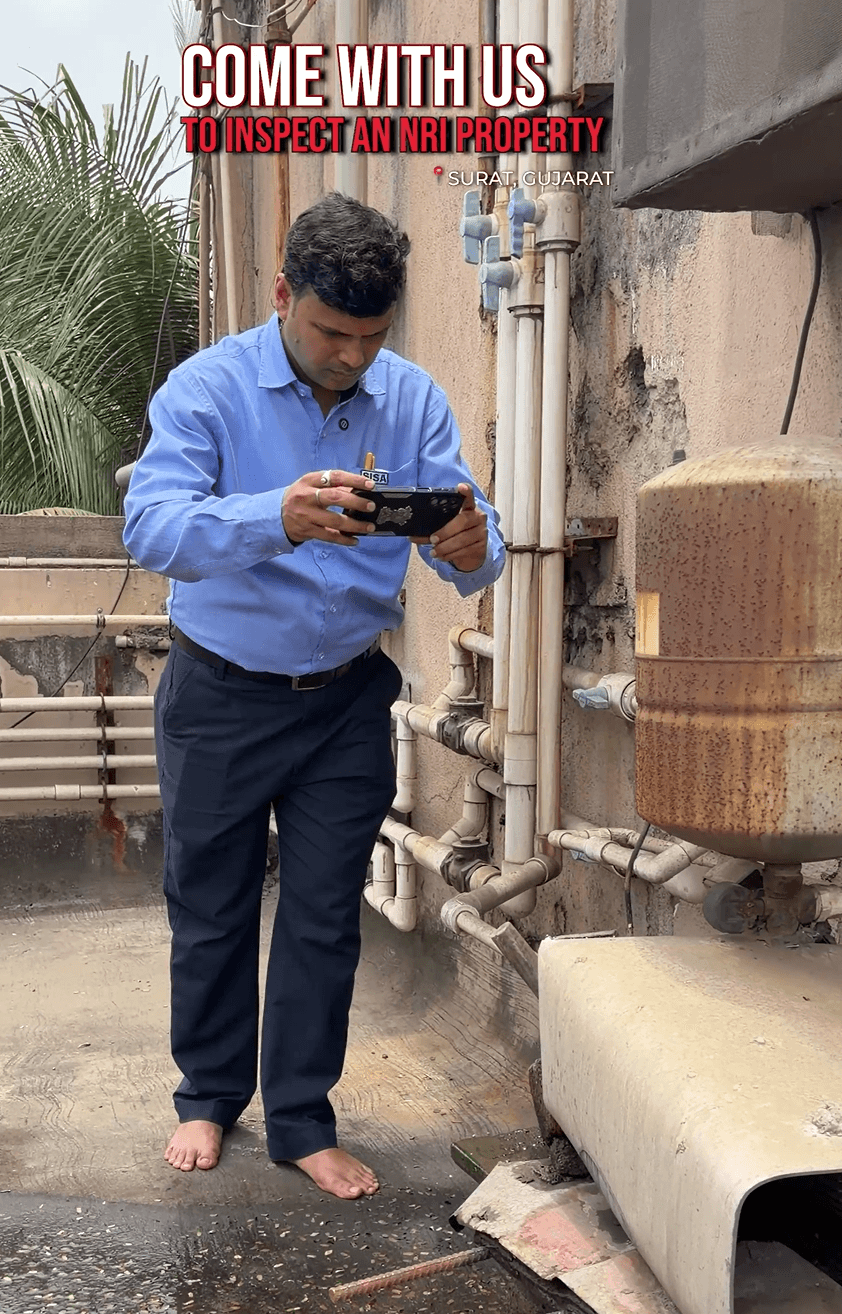
If you own a flat, bungalow, plot, or commercial property in Surat but live abroad, regular property inspections can help you identify maintenance, security, access, tenant, and repair issues before they become more difficult to manage. An NRI property inspection in Surat is an on-ground visit to check the visible condition of your property, document what is found, and share clear updates with you. A useful inspection may include photographs, videos, observations, receipts, and next-step recommendations not just a verbal update. SISA provides NRI property support in Surat and South Gujarat , including property checks, local coordination, repair follow-up, bill coordination, and proof-based updates.
Important: This article explains general property inspection and coordination needs. It is not a structural, legal, tax, electrical, or engineering assessment.
Why do NRIs need property inspections in Surat?
Managing a property from abroad is difficult because you cannot always visit when something goes wrong. A home may remain locked for months, while small issues continue unnoticed.
Regular or one-time inspections can help identify:
Seepage, dampness, and roof leakage.
Plumbing and drainage problems.
Electrical or meter-related concerns.
Mold, pests, termites, or unusual smells.
Broken locks, doors, windows, or fixtures.
Damage after a tenant moves out.
Unfinished or poorly completed repairs.
Society maintenance or utility issues.
Suspicious access or visible security concerns.
Changes around a plot, boundary, or independent house.
Property preparation needs before your India visit.
NRIs discussing property ownership online often raise concerns about managing homes from abroad, trusting local representatives, arranging due diligence, and obtaining reliable updates without being physically present.
What is an NRI property inspection?
An NRI property inspection is a planned physical visit to inspect agreed areas of a property while the owner is living outside India.
Depending on the scope, the visit may include:
Checking the interior and exterior condition.
Looking for visible water, dampness, pest, or maintenance issues.
Checking doors, windows, locks, and access points.
Reviewing visible plumbing and electrical concerns.
Photographing meters, bills, receipts, or completed work.
Checking whether approved repairs appear to be completed.
Reporting urgent and non-urgent observations.
Coordinating a qualified vendor or professional if additional work is required.
An inspection is not the same as a legal title search, structural audit, valuation, or engineering certificate. If a specialist opinion is needed, it should come from the relevant qualified professional.
What should be checked inside the property?
A thorough visit should follow a consistent checklist.
Walls and ceilings
Check for:
Damp patches.
Bubbling or peeling paint.
Yellow or brown water stains.
Mold or black spots.
Cracks that appear new or have widened.
Soft plaster or damaged corners.
Signs of seepage near bathrooms and windows.
Photographs should show both the affected area and enough surrounding context to identify its location.
Doors, windows, and cupboards
Check whether:
Main doors close and lock properly.
Windows open and close normally.
Wooden fixtures show swelling.
Cupboards or drawers are jammed.
Handles, hinges, and locks are damaged.
Balcony or terrace doors are secure.
Kitchen and bathrooms
Check for:
Leaking taps or pipes.
Blocked sinks and drains.
Standing water.
Broken tiles or sanitary fixtures.
Dampness below sinks.
Unusual smell.
Signs of pests or insects.
Do not ask an unqualified person to dismantle plumbing or electrical systems. Visible observations should be documented, and specialist work should be assigned appropriately.
Electrical safety
The person visiting should look for visible signs of:
Water near the main electrical board.
Damp switchboards.
Burn marks.
Loose or damaged wiring.
Tripped breakers.
Unusual meter or power status.
If electrical moisture or damage is suspected, the power should not be operated casually. A qualified electrician should inspect the system before use.
What should be checked outside the property?
The exterior may reveal problems that are not visible from inside.
Terrace and balcony
Check:
Blocked drains.
Water pooling.
Damaged waterproofing.
Cracked surfaces.
Loose railings.
Broken tiles.
Plant growth or debris.
Exterior walls
Look for:
Cracks near windows.
Damaged plaster.
Water marks.
Gaps near AC units or pipes.
Signs of unauthorized drilling or construction.
Compound, boundary, and access
For independent houses, plots, and bungalows, check:
Gate and lock condition.
Compound wall.
Boundary markers.
Signs of new construction nearby.
Unusual storage or dumping.
Access roads.
Visible changes in neighbouring use.
A visual inspection cannot establish legal ownership or conclusively prove encroachment. If a concern appears, involve a qualified lawyer, surveyor, or other relevant professional.
What should be checked after a tenant leaves?
A move-out inspection helps document the property’s condition before a new tenant takes possession.
Check:
Walls, paint, flooring, and doors.
Electrical fixtures and fans.
Plumbing and bathroom fittings.
Kitchen appliances and cabinets.
Windows, locks, and keys.
Furniture or equipment listed in the agreement.
Meter readings.
Visible damage.
Cleaning and pest-control requirements.
Outstanding society or utility matters.
Photographs taken before and after tenancy can help create a clearer record, but they do not replace the terms of the rental agreement or legal advice in a dispute.
When should an NRI arrange an inspection?
A one-time or recurring inspection may be useful:
After heavy monsoon rain.
Before renting out a vacant property.
After a tenant moves out.
Before listing the property for sale.
After renovation or waterproofing.
Before an overseas family visit.
After a relative reports damage.
When a caretaker stops responding.
When the property has been locked for several months.
When you receive a society, utility, or municipal notice.
When you need someone to verify whether approved work is complete.
One-time inspection or recurring monitoring?
The right option depends on your property and situation.
Situation | Suitable support |
|---|---|
You have not seen the property recently | One-time condition inspection |
The property remains vacant | Periodic inspection |
A tenant has moved out | Move-out inspection |
You recently completed repairs | Post-repair verification |
Heavy rain affected the area | Post-monsoon inspection |
You are preparing to rent or sell | Pre-listing inspection |
You own a remote plot or bungalow | Recurring site monitoring |
You are visiting India soon | Pre-arrival home preparation |
If you are unsure which option is suitable, speak with the SISA team and explain your property’s situation.
What proof should an NRI receive?
A useful inspection update should make it easier for you to understand the property without being physically present.
Depending on the agreed scope, the update may include:
Date and time of visit.
Property location.
Photos of important areas.
Short videos where useful.
Condition observations.
Urgent and non-urgent issue list.
Meter or receipt photographs.
Vendor or technician visit details.
Recommended next steps.
Repair coordination status.
Completion proof after approved work.
SISA’s stated process includes photos, video, and location proof for property tasks, along with verification and an approved service scope. Confirm the exact deliverables before approving a service.
Why use a managed local team?
Relatives, neighbours, building staff, or caretakers may be helpful, but they may not always be available or able to provide consistent documentation.
A managed local team can help create a repeatable process:
Understand the requested task.
Confirm property access.
Define the inspection scope.
Coordinate the local visit.
Inspect the agreed areas.
Share photos, videos, and observations.
Obtain approval before additional work.
Coordinate appropriate vendors when required.
Share completion proof.
Keep the communication record organised.
The purpose is not to replace family support. It is to create an accountable process for tasks that need regular follow-up, documentation, and local execution.
How SISA supports NRI property owners in Surat
SISA supports NRIs who need a local team for property checks and coordination in Surat and South Gujarat.
Depending on the approved scope, SISA can help with:
Property condition inspections.
Vacant-property checks.
Post-monsoon inspections.
Repair coordination.
Vendor visits.
Society and utility follow-up.
Bill and receipt coordination.
Pre-visit home preparation.
Photo and video updates.
Local task supervision.
SISA does not replace a structural engineer, lawyer, CA, electrician, plumber, surveyor, or government authority. When specialist advice is required, SISA can help coordinate the appropriate professional and manage the operational follow-up.
Read how SISA works to understand the service scope, verification process, approvals, and proof provided for local tasks.
What a SISA property inspection process looks like
1. Share your property details
Tell us:
Property location.
Property type.
Whether it is vacant or occupied.
The reason for the inspection.
Any specific concern you want checked.
2. Confirm the scope
We clarify what should be inspected and what deliverables you can expect.
3. Approve the task
You receive the agreed scope and price before local coordination begins.
4. Local coordination
The visit or required task is coordinated with the relevant local person or vendor.
5. Inspection and documentation
The agreed areas are checked and documented.
6. Proof-based update
You receive the available photographs, videos, observations, receipts, and recommended next steps.
7. Further action, if required
If repairs or specialist work are needed, SISA can coordinate the next stage after your approval.
Frequently Asked Questions
What is included in an NRI property inspection in Surat?
It may include a physical visit, visible condition checks, photographs, videos, observations, and next-step recommendations. The exact scope should be confirmed before the visit.
Can SISA inspect my vacant property in Surat?
SISA’s property support service is designed to help NRIs coordinate property checks and local tasks in Surat and South Gujarat.
How often should a vacant property be inspected?
The frequency depends on the property’s condition, location, occupancy, weather exposure, and security needs. A property that remains locked for long periods may need periodic checks rather than one annual visit.
Can you check for structural damage?
A general inspection can identify visible signs that may need attention. A structural assessment must be performed by a qualified structural engineer.
Can you inspect a property after heavy rain?
Yes, a post-monsoon or post-rain inspection can focus on seepage, dampness, drainage, roof or terrace concerns, electrical moisture, and visible exterior damage.
Can you supervise repairs?
SISA can coordinate approved repair work and share progress updates. Technical recommendations should come from the relevant qualified professional.
Can you check property title or ownership documents?
SISA can help coordinate document collection and connect you with appropriate professionals. Legal title verification must be completed by a qualified property lawyer.
Can I request only one inspection?
A one-time inspection may be possible depending on the location, scope, and availability. Share your property details so the team can clarify the next step.
How do I start?
You can contact SISA or start a WhatsApp conversation with the basic details of your property.
Need your Surat property checked?
Own a flat, bungalow, plot, or commercial property in Surat but live abroad?
Share your property details with SISA and we will help you understand the next practical step. No commitment is required to start the conversation.